Ruby Rewards
- 4.7
- Rating
- 100.00K
- Installs
- Free
- Price

 Analysis by App-foxy
I look at restaurant loyalty apps a little differently from ordinary food-ordering tools. The useful ones should save me time when I already know where I want to eat, but they should also make rewards easy to understand instead of turning a simple meal into a scavenger hunt through menus and conditions. Ruby Rewards, the Food & Drink app from Ruby Tuesday, takes that focused approach. It brings the restaurant’s rewards program and order-ahead option into one place, with a free download and an Everyone age rating.
After spending time with it, I see the app as a practical companion for people who visit Ruby Tuesday more than once in a while. Its main appeal is not that it replaces every restaurant app on a phone. It is that it connects a visit, a future reward, and a pickup order in one Ruby Tuesday-centered workflow. That narrow focus is also its biggest limitation: if you rarely eat there, the app has less reason to stay installed than a broader delivery or restaurant-discovery service.
How Ruby Rewards fits into a real meal routine
The most convincing use case is an ordinary busy day. I might be leaving work, know that I want Ruby Tuesday, and prefer to collect food rather than wait around for a table or place an order at the counter. An order-ahead feature can make that decision easier, especially when I already know what I want. Instead of treating rewards and ordering as separate activities, this app puts both under the same restaurant account experience.
You May Also Like

 Blood Strike: 2.5 Anniversary
Blood Strike’s Loadouts Turn Every Drop Into a Tactical Gamble
A close look at Blood Strike’s custom loadouts: how fast access to signature weapons reshapes its battle royale rhythm, rewards preparation, and narrows the gap between fights.

 Pandora - Music & Podcasts
Pandora’s Music Is Easy to Start, but Harder to Recover
Pandora’s strength is its low-effort path from a seed to a station. Its weak spot is how much confidence it asks you to place in connection, setup, and quiet recovery.

 8 Ball Pool
 Is Built on Rivalries, Rematches, and Routine
A close look at the rivalries, rematches, shared routines, and unanswered safety questions that turn a quick pool match into a persistent mobile community.

 Samsung Music
’s Quiet Strength Is Playing What You Already Own
Its reach comes less from spectacle than from dependable access to a personal library. That simplicity is both the app’s strongest retention engine and its ceiling.

 AccuWeather: Weather Radar
AccuWeather Review: A Quick, Clear Forecast for Everyday Decisions
For everyday plans, the best forecast is the one you can understand quickly. AccuWeather makes rain timing, radar, and local conditions easy to act on, with a few trade-offs.

 Hill Climb Racing
Why Hill Climb Racing Still Turns Crashes Into One More Run
A tiny car, a bumpy hill and one more upgrade: Hill Climb Racing keeps resurfacing because its simple chaos makes every near-miss feel personal.
More From Our News Desk
View All News


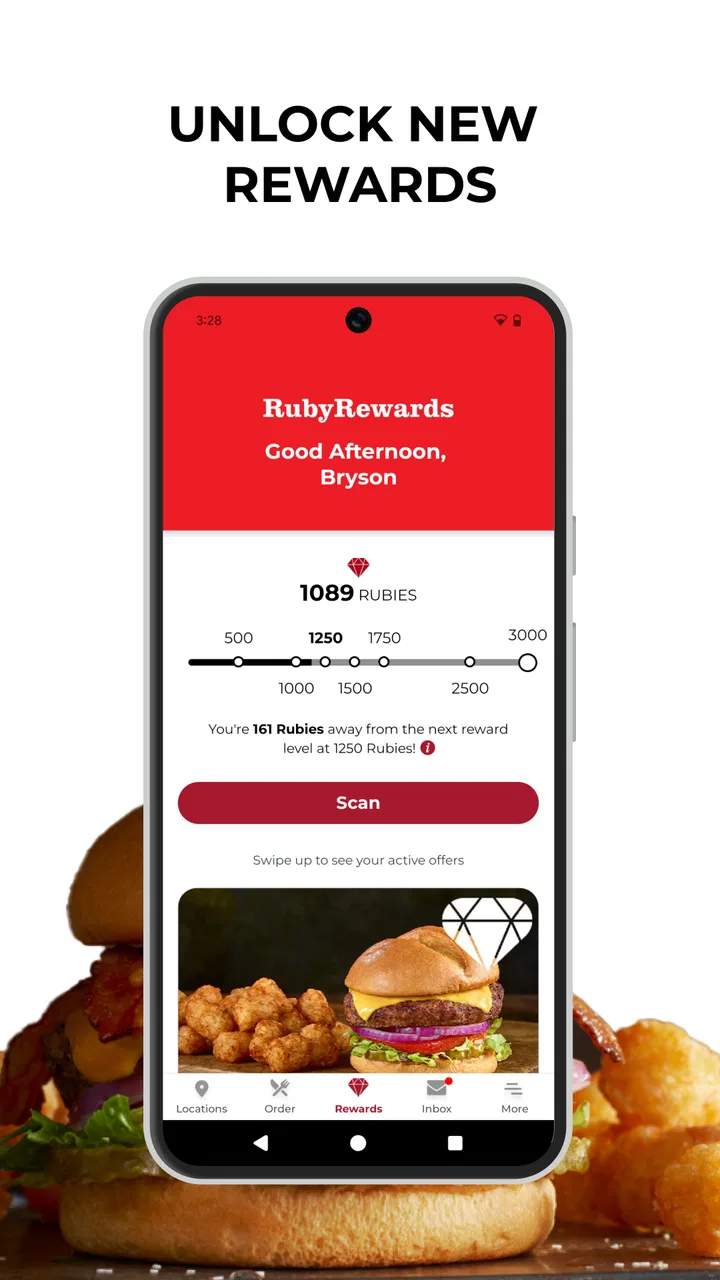
That matters because loyalty programs are most useful when they fit naturally into something I was going to do anyway. The app’s Ruby Rewards system lets members collect Rubies and trade them for food. I would not install it solely because the word “rewards” sounds attractive; I would install it if Ruby Tuesday is already part of my routine. In that situation, the app gives each eligible visit a second purpose beyond the meal itself.
I also appreciate that the basic proposition is easy to explain. Ruby Rewards is free, and the app is published by Ruby Tuesday. It is not trying to be a general-purpose dining marketplace, a recipe collection, or a social food network. That clarity helps me decide whether it belongs on my phone: frequent or occasional Ruby Tuesday customers have a reason to try it, while people looking for many different restaurants should probably use a broader service.
The current store presence suggests a healthy level of interest, with a 4.7 average from around 6.5 thousand ratings and more than 100 thousand installs. Those figures do not tell me that every user has the same experience, but they do indicate that the app has found an audience beyond a handful of early adopters. I would still judge it by how smoothly it handles my own ordering and reward habits rather than treating popularity as a guarantee.
Rewards are more useful when planned before ordering
One practical habit is to check the rewards area before I decide what to order, rather than waiting until after the meal. That small change can prevent a common loyalty-app mistake: discovering a redeemable option only after I have already paid. I would review the available Ruby balance, look at the food reward choices, and then decide whether to use a reward now or save it for another visit.
This creates a trade-off that is easy to overlook. Redeeming immediately feels satisfying, but saving Rubies may make more sense if I am planning a larger meal or a visit with someone else. The best choice depends on the reward options shown in the app at that time, so I would treat the rewards screen as part of the ordering decision rather than as a passive points counter.
I would also make a habit of checking the final order summary carefully. Loyalty redemption and order-ahead convenience are valuable only when I understand what the app is applying to the order. A quick review of the selected items, pickup details, and reward choice is worthwhile before confirming anything. This is not a criticism unique to Ruby Rewards; it is simply the safest way to use any restaurant app that combines purchasing with a loyalty balance.
Order ahead is helpful, but it is not the same as delivery
The phrase “order ahead” is important because it sets the right expectation. The app is designed to help me arrange a Ruby Tuesday order in advance, not to serve as a universal delivery platform. That distinction makes it a better fit for pickup planning than for someone who wants meals brought from many restaurants to one address.
For a planned lunch, the workflow can be more direct than opening a delivery marketplace, filtering through unrelated restaurants, and accepting whatever information that marketplace displays. I already know the restaurant, so the app’s limited scope becomes an advantage. I can focus on the Ruby Tuesday menu and the timing of my order instead of browsing a large catalog.
On the other hand, I would not choose it when my main question is “What should I eat nearby?” or when I want to compare several restaurants in one checkout. A delivery marketplace or a general restaurant app is better for discovery and cross-restaurant comparison. Ruby Rewards is strongest after the restaurant choice has already been made.
There is another everyday trade-off. Ordering ahead can reduce waiting, but it also asks me to make decisions earlier. If my schedule changes, the convenience may be less valuable than simply choosing at the restaurant. I would use it when I have a reasonably clear pickup plan, not when my arrival time is uncertain or I am still deciding where to eat.
What the current version tells me about the product’s direction
The current version is 1.4, while the app’s release date is listed as October 21, 2022. I read that combination as evidence of a product that has moved beyond its initial launch while remaining fairly focused. It does not suggest a sprawling platform with dozens of unrelated tools. Instead, the visible direction is centered on the essentials: Ruby Rewards membership, Rubies that can be exchanged for food, and order-ahead functionality.
That focus can be a strength. A restaurant loyalty app does not need to become a miniature social network to be useful. If the developer keeps the core actions clear and dependable, a modest feature set may serve regular customers better than a crowded interface. When I open an app like this, I care more about finding my rewards and placing an order than about discovering decorative extras.
At the same time, version numbers alone do not tell me exactly which screens or workflows changed over time. I would separate what is visible now from what I might hope to see later. The present product clearly positions itself around rewards and advance ordering; any broader personalization, expanded restaurant tools, or deeper account controls would be future possibilities rather than features I would assume are already there.
For existing users, a newer version can matter even when the headline features remain familiar. Small improvements in navigation, order review, or reward visibility can make repeated use less tiring. I would pay attention to whether returning customers can get from the opening screen to their most common action quickly. A loyalty app earns its place on my phone through repeated convenience, not through a single impressive first session.
The experience for new and returning customers
A new user should think about the app in two stages. First, joining or accessing Ruby Rewards establishes the reason to return. Second, using order ahead turns that membership into a practical routine. If I only open the app once to browse, I have not really tested its value. The meaningful test is whether the next visit feels simpler because my rewards and order planning are already connected.
Returning users may benefit most from a repeatable personal workflow. I would open the app before leaving, review the rewards balance, choose whether a redemption makes sense, place the order ahead, and then check the completed details before heading out. That sequence is more useful than opening the app spontaneously at the restaurant, when I may be rushed or distracted.
Families and small groups may find the rewards side especially relevant because a planned Ruby Tuesday visit can create a reason to save Rubies for a future meal. Still, I would avoid assuming that every reward will suit every order. A food reward may be valuable to one person and less useful to another depending on what the group wants. The app makes the reward available; the user still needs to decide when it has the best practical value.
Someone who visits Ruby Tuesday only once during travel should have a different expectation. The free price removes a financial barrier to trying it, and the Everyone rating makes it broadly accessible, but a one-time diner may not get much long-term benefit from a loyalty account. In that case, the order-ahead function may be the more immediate reason to use it, provided the restaurant and pickup plan already fit the trip.
Where the app feels limited
The narrow restaurant focus is the clearest limitation. Ruby Rewards cannot replace a service that compares local restaurants, aggregates delivery choices, or helps me decide between cuisines. If I want one app for every meal, installing a dedicated Ruby Tuesday app may feel unnecessary. Its value rises with restaurant loyalty, so infrequent customers should weigh that carefully.
The rewards model also requires attention. Collecting Rubies sounds simple, but the practical value depends on how often I visit and whether the available food redemptions match what I actually want. I would not treat the balance as cash or assume that every order should use it. The right approach is to see Rubies as a benefit attached to future Ruby Tuesday meals, then redeem them when the available choice genuinely improves the order.
Order-ahead convenience has its own boundaries. It helps when I know the restaurant, the food, and roughly when I will collect the order. It is less useful for spontaneous dining, uncertain schedules, or situations where I want a delivery comparison. That is a workflow limitation rather than a flaw, but it is important because many people instinctively group all food apps together.
I also think users should keep their expectations realistic about app evolution. The current version and release history show an established product, but they do not justify assuming that every feature a large restaurant platform might offer is included. I would evaluate this app on the actions it is built to support instead of expecting it to become a complete replacement for a restaurant website, delivery marketplace, and universal loyalty wallet.
Who should install it and who should skip it
I would recommend Ruby Rewards to a Ruby Tuesday regular, someone who visits often enough for Rubies to accumulate, or anyone who frequently wants to arrange a pickup order in advance. It is also a sensible choice for a customer who dislikes carrying a separate loyalty card or trying to remember rewards details at the counter. Keeping the program and ordering process together is the central convenience.
I would be more selective for occasional diners. If Ruby Tuesday appears on my calendar only once or twice and I already have a preferred way to place restaurant orders, the app may not change much. The free download makes experimentation easy, but free does not automatically mean useful. I would install it when I expect another visit soon, then decide whether the rewards workflow earns a permanent place on my phone.
I would skip it as my primary food app if I need broad restaurant discovery, delivery from multiple businesses, or a single wallet for unrelated loyalty programs. A general alternative is better for those jobs. Ruby Rewards wins when loyalty to one restaurant matters more than having every restaurant in one interface.
What I would watch as the app continues to develop
My first test for future updates would be whether the path from rewards balance to redemption becomes even clearer. A user should be able to understand what Rubies can do, decide whether to spend them, and see the effect on an order without hesitation. That clarity matters more than adding features that distract from the central benefit.
I would also watch the relationship between rewards and order ahead. The strongest version of this app is one where those functions feel like one continuous visit: plan the meal, apply the appropriate reward, confirm the order, and collect it with confidence. If the two areas feel disconnected, users may continue to use only one of them and miss the reason the app exists as a combined experience.
For existing customers, consistency is just as important as novelty. A loyalty app is opened repeatedly, often in a hurry, so stable navigation and dependable order review are more valuable than dramatic redesigns. I would welcome improvements that reduce repeated taps or make a returning customer’s common actions easier, while being cautious about changes that make a familiar workflow harder.
Overall, my view is positive but specific. Ruby Rewards is not a universal food solution, and I would not recommend it on the promise of replacing every other restaurant tool. For Ruby Tuesday customers, though, it offers a sensible combination of rewards and advance ordering, backed by a free app from the restaurant itself. If Ruby Tuesday is already one of your regular choices, the app is worth trying because it turns loyalty into a practical part of planning the next meal. If it is not, a broader food service will probably serve you better.
FAQs for Ruby Rewards
01What is Ruby Rewards and how does it work?
Ruby Rewards is a rewards-based mobile app where users can typically earn points, coins, or other virtual benefits by completing available activities such as surveys, offers, tasks, games, or promotional actions. After reaching the required redemption threshold, eligible users may exchange their balance for the rewards shown in the app. Available activities, earning rates, and redemption options can vary by country and account.
02Is Ruby Rewards free to download and use?
Ruby Rewards is generally presented as a free app, so you should not need to pay an upfront download or membership fee to create an account and explore its features. However, some activities may involve third-party offers, subscriptions, purchases, or specific conditions. Always read the offer details carefully before participating, and never assume that completing an activity guarantees a reward unless the app clearly confirms the requirements.
03How can I redeem rewards in Ruby Rewards?
Redemption normally depends on accumulating enough points or credits to meet the minimum payout requirement displayed in your account. Open the rewards or withdrawal section, review the available options, and follow the verification instructions. Processing times, supported payment methods, minimum thresholds, and regional availability may differ. Make sure your account information is accurate, because incorrect details can delay or prevent successful delivery.
04Is Ruby Rewards available in every country, and what permissions does it require?
Ruby Rewards may not offer the same features or reward opportunities in every location. Surveys, promotional tasks, payment methods, and even account eligibility can depend on your country, age, and local regulations. During installation, review the permissions requested by the app and grant only those that seem necessary for its functions. You should also check the current privacy policy to understand how personal and device data are handled.
05Are rewards from Ruby Rewards guaranteed, and is the app safe to use?
Rewards are not necessarily guaranteed simply for installing the app or completing an activity. Each task may have eligibility rules, tracking requirements, deadlines, and verification checks, and third-party offers may follow separate terms. For safer use, download Ruby Rewards only from an official app store, avoid sharing unnecessary sensitive information, and review user feedback, privacy practices, and withdrawal conditions before investing significant time.
Pros
- Simple reward system that is easy for new users to understand.
- Offers multiple ways to earn points through everyday activities.
- Reward options can make regular app usage feel more worthwhile.
- Clean interface helps users find earning and redemption features quickly.
- Suitable for users who prefer small
- incremental rewards over complex programs.
Cons
- Rewards may take time to accumulate
- especially for infrequent users.
- Some earning activities may be limited by location or account eligibility.
- Points and redemption conditions can change without much notice.
- The app may require personal information to create and verify an account.
- Notifications and promotional content may become distracting over time.

Ruby Rewards
Gallery